I. The Religious Jungle: The spirit of a thing always seems to carry a bit of mystery.
A jungle is an enticing place, both literally and metaphorically. It is its own microcosm, with a canopy sky above, a loamy leaf-strewn earth below, and a dense entwined biome in between. Sometimes it is preternaturally quiet, sometimes full of cacophonous sounds; different denizens have their times. Yet to walk in a real jungle requires a path, for without a path, strolling would be impossible: even with a machete, creating your own path would be not only prohibitively slow, but also incredibly destructive. There’s so much to get through. (Not unlike life or, at least, our modern information landscape.) So, oddly enough, to get away from other people by wandering alone through a jungle, one still needs to rely on the efforts of other people. You embed yourself in nature by trodding other people’s footsteps.
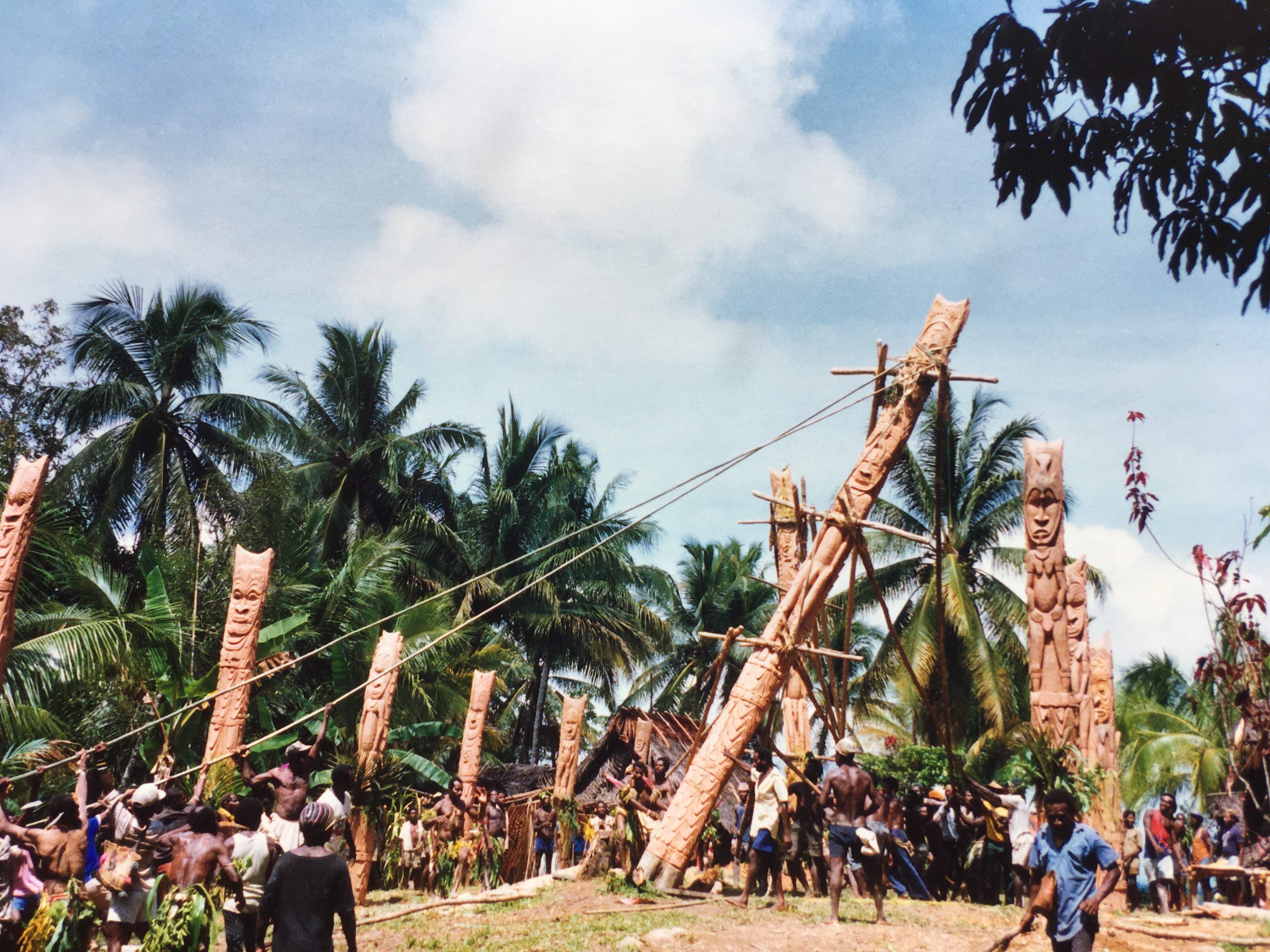
In 1990 I was hiking in Papua New Guinea and stopped for the night in Kanengara village, which was in the process of a centerpost-raising ceremony for a new Haus Tambaran, a house of ancestral spirits, something akin to a temple. The ceremony began before dark and lasted until morning, with dozens of participants, faces painted, lavishly adorned with leaves, some with carved-wood headdresses, and lots of dancing by firelight. The celebrants, clearly in another headspace but nevertheless cognizant of their performance, were surrounded by ordinary people, and we ate fried grubs and danced on the sidelines. I don’t know which religion this village and this temple followed, but presumably some kind of animism, perhaps something like a local version of Shinto.
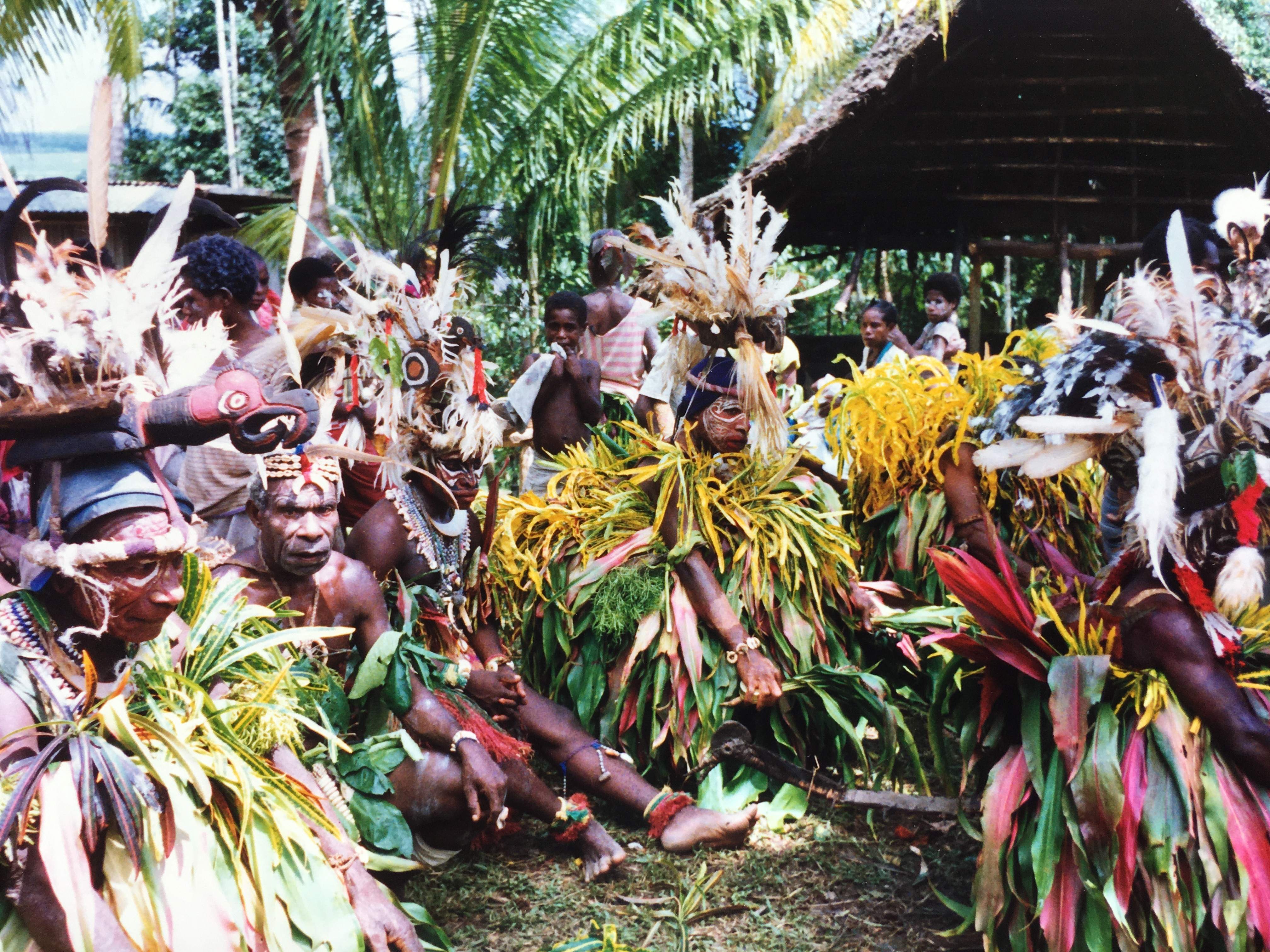
My journal for the following day says: “The constant dancing and drumming stopped around 7am, but continued sporadically as the whole village turned out, as well as folks from other villages. The center posts were rolled to the holes, speeches given, a general party atmosphere around. Then the real fun began as the whole village lined up in two lines from the horizontal post and an extremely long (200’+) green vine, a good 3” diameter, was wrapped around it once. Then the men closer to the pole, using leverage sticks and steadying poles, and the women and girls at the far ends of the vine: everyone heaved the thing slowly into place. When this was done, everyone cheered and the Tambaran dancers came out and danced around it. Then up came the second one, also a good 20’ high, and after more festivities I felt it time to go. Having been here relatively long, this took a bit of time, what with saying goodbye to everyone I’d met. I then went east to Kraimbit….”
Animism, as articulated by Edward Tylor, is the belief that all living things (and even some inanimate things, like some special mountains and rivers) are animated by spirits. “Spirit” is a fascinating concept. Lots of people, both religious and not particularly religious, say they are “spiritual.” Christians talk about both “spiritual people” (as opposed to “fleshly people”) and a divine spirit that is one third of their triune god. Shinto (神道) literally means “the way of spirits.” In English, we routinely separate “the spirit of the law” from “the letter of the law.” We can characterize a person or performance as “spirited” or “inspired.” What connects these ideas?
to be coninued...